
Ever thought about becoming a Trustee for Headway, but assumed it wasn’t for someone like you?
We want to change that.
To mark Trustees’ Week, we sat down with Priscilla Norgren, a current Headway Bristol Trustee, to bust the myths around time commitments, legal jargon and who ‘belongs’ in the boardroom.
Our Board needs to reflect the diverse communities we support, and that means we need your unique perspective. Are you are a medical or brain injury specialist wondering how to balance governance with a demanding clinical schedule? Or someone from an underrepresented background worried that your lived experience won’t fit a ‘traditional’ board? This Q&A is for you.
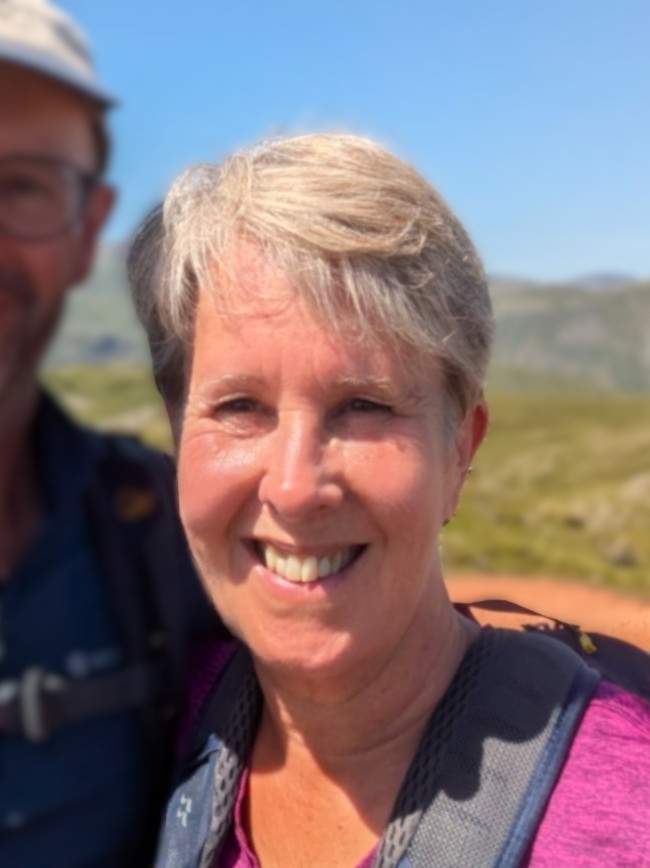
“I wanted to find a volunteer activity where I could continue to contribute something to the community”
HWB: Hello Priscilla! What made you decide to become a trustee at Headway Bristol?
PN: I was heading for retirement from my career as a GP and wanted to find a volunteer activity where I could continue to contribute something to the community, and for which my medical experience might be of some value. Having said that, as a GP I had relatively little experience of brain injury, as that tends to be managed more in secondary care and by organisations such as Headway. I would encourage potential trustees that not knowing much about brain injury is in no way an impediment to making a useful contribution to this charity.
HWB: What’s the time commitment? How many hours a week or month does it take?
PN: The time commitment doesn’t have to be onerous, though if you are interested and motivated, the charity will happily find more ways for you to give your time! The basic commitment is for a two-hour trustee board meeting about once every two months, and potentially also sitting on a subcommittee, though those have been put on the back burner since I joined to make way for the more pressing issues we had around finding a new home for Headway Bristol.
So far, in my few years as a trustee, I wouldn’t say there’s been anything hefty in the way of preparation for these meetings. It’s usual practice to have a look at any financial statements circulated, the agenda, and review the minutes of the previous meeting. There may sometimes be additional information that needs to be read through if we are dealing with a specific issue, but in my experience so far, it is always a very manageable amount.
HWB: What happens if you have a chaotic week at work or home and can’t prep as much for a meeting?
PN: Really nothing. You can still be useful by attending the meeting, listening and offering your perspective if appropriate. This is a voluntary position, and the people we work with all know that trustees have other things they may be juggling in their lives, including a full-time job or a young family.
HWB: Do you need to be a CEO, doctor or lawyer to be on the board, or are there other skills a brain injury charity needs?
PN: Absolutely you do not need to be any of those things. I would say that although I am a doctor, my medical knowledge and experience have made up only a very tiny part of what I actually bring to the board. I suspect my common sense and communication skills have been of more use. We do have lawyers on the board, but also an accountant and individuals with business and charity backgrounds. We would love to have some trustees with experiences and skills outside of those already represented – the more diverse the better!
HWB: Do I need to be an expert on brain injury before I apply?
PN: Absolutely not. Your role as a trustee is more like being a parent governor for a school. The experts are the organisation’s staff (like the teachers) who work directly with the service users, and who are represented on the board by the charity’s chief executive officer. The role of the trustees is to offer strategic advice and support to the CEO, more from the perspective of keeping an overview of the charity’s direction of travel.
HWB: It sounds like a huge responsibility! What’s the scariest part, and how is it actually managed?
PN: I haven’t found it to be scary at all. Headway is a welcoming and inclusive organisation right up to trustee level. There are some very experienced trustees who are happy to share what they know, and information is provided on joining the organisation to signpost where you can go to get more detail on the roles and responsibilities of trustees.
HWB: What level of detail does the Headway Bristol board get into?
PN: The role of a trustee is mainly about strategy and support of the CEO and senior management team. Our brief is essentially to provide whatever support they need to run the charity effectively, and sometimes also about challenging them as a ‘critical friend’, to ensure we are all continuing to work towards the charity’s stated aims.
HWB: What’s the board’s culture like? Do you always agree?
PN: I have found the board to be friendly and relaxed. Individual opinions and ideas are listened to, and if challenged, that is done with respect. The board is united by a shared commitment to and belief in the enormous value and importance of the work done by Headway Bristol for the brain injury community.
HWB: What’s been your highlight, so far, of being a trustee?
PN: Getting to work with such a lovely group of people! And there’s a great feeling of contributing to a small, in some ways quite unglamorous, but so incredibly worthy charity. There are many prominent charities with strong emotional pulls, but the support Headway Bristol provides for individuals whose whole lives are impacted by brain injury really is vital and life-changing.
HWB: Thank you, Priscilla, and to all our trustees, for the amazing work you do.
Are you ready to shape the future of Headway Bristol?
If you have the passion, the commitment and a unique perspective to share, we want to hear from you.
- Contact us to learn more about applying to become a trustee.
- Have more questions? Reach out to arrange an informal, no-pressure chat with one of our current trustees.
Get in touch today and help us build a stronger, more inclusive Headway.